Residential Vs Commercial Property Exploring Key Differences
Residential Vs Commercial Property sets the stage for this enthralling narrative, offering readers a glimpse into the distinct world of real estate. Understanding the differences between residential and commercial properties is essential for anyone looking to invest wisely or explore their options in the real estate market. From fundamental purposes to investment potentials and legal considerations, each property type has unique characteristics that cater to different needs and opportunities.
In this discussion, we will delve into the primary purposes of residential and commercial properties, examine their investment potential, and consider the legal and regulatory frameworks that guide ownership. Whether you’re a novice investor or simply curious about real estate, this overview will equip you with the knowledge to make informed decisions.
Overview of Residential and Commercial Properties
Understanding the distinctions between residential and commercial properties is essential for anyone involved in real estate. Each type serves different purposes and caters to unique markets, which makes them fundamentally different in nature. In this overview, we will delve into the primary characteristics, purposes, and examples of both residential and commercial properties.Residential properties are primarily designed for individuals and families to live in, providing the essential shelter and personal space.
The main goal of these properties is to create a comfortable and functional living environment. They encompass a wide range of property types, each suited to various living arrangements and lifestyles.
Types of Residential Properties
Residential properties can vary significantly in size, style, and function. Here are some common types along with their features:
- Single-Family Homes: Detached structures that house one family, offering privacy and space.
- Multi-Family Units: Buildings designed to accommodate multiple families, such as duplexes or apartment complexes.
- Condominiums: Individually owned units within a larger building or community, often sharing amenities.
- Townhouses: Attached homes that share walls with other units, typically found in urban settings.
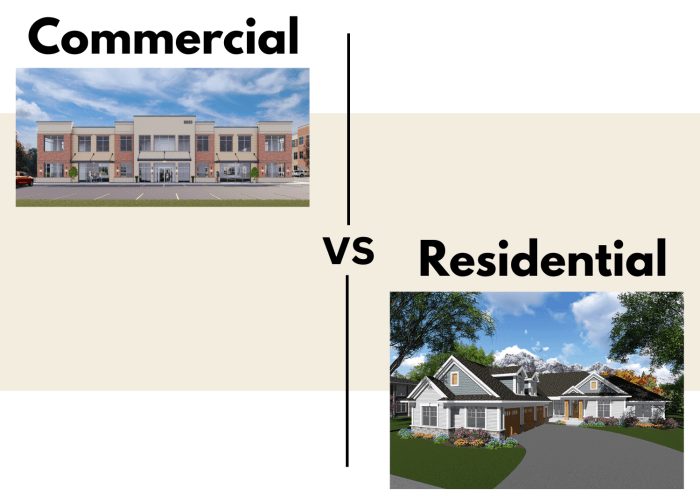
On the other hand, commercial properties are intended for business purposes and include a variety of spaces that cater to different industries. These properties are crucial for economic activity, offering venues for companies to operate and generate revenue.
Types of Commercial Properties, Residential Vs Commercial Property
The commercial property sector is diverse, encompassing various property types that serve different business needs. Here are some examples:
- Office Buildings: Spaces designed for professional work, ranging from small office suites to large corporate headquarters.
- Retail Stores: Properties specifically for selling goods to consumers, including everything from small boutiques to large shopping malls.
- Industrial Properties: Facilities used for manufacturing, warehousing, or distribution of products.
- Hospitality: Properties such as hotels and motels that provide lodging and related services to travelers.
Understanding these categories helps investors, buyers, and tenants make informed decisions in the real estate market. Whether seeking a place to reside or a space to conduct business, recognizing the differences and purposes of residential and commercial properties is key to navigating the property landscape effectively.
Investment Potential
When considering the investment potential of residential versus commercial properties, it’s essential to evaluate various factors that influence returns and risks. Investors often have different motivations and expectations when choosing between these two types, each with its unique characteristics and market dynamics.Residential properties generally offer steady cash flow and less volatility, making them appealing for investors seeking stability. On the other hand, commercial properties can yield higher returns but often come with increased risks.
The following details Artikel the key factors that influence investment returns for both property types.
Factors Influencing Returns on Investment
Understanding the factors that affect returns on investment is crucial for making informed decisions in real estate. The factors include location, property type, market demand, and economic conditions. Here’s a closer look at these elements:
- Location: Properties in high-demand areas tend to appreciate more quickly, which is particularly true for residential units near schools, amenities, and workplaces. For commercial properties, proximity to major business hubs can significantly impact rental rates and occupancy levels.
- Property Type: Different types of residential properties (single-family homes, apartments) and commercial properties (offices, retail, industrial) have distinct market dynamics and potential yields. For instance, multifamily units often provide better cash flow than single-family homes.
- Market Demand: The overall demand for housing or commercial space influences rental prices and occupancy rates. An increase in population often leads to higher demand for residential properties, while economic growth can boost the demand for commercial spaces.
- Economic Conditions: Interest rates, inflation, and economic growth play a significant role in determining the viability of investments in both markets. A strong economy can lead to higher rents and property values.
Risk Factors in Residential and Commercial Properties
Investing in real estate comes with inherent risks, but these risks can vary significantly between residential and commercial properties. Here’s an overview of key risk factors associated with each:
- Tenant Stability: Residential properties often have a higher turnover rate as tenants move frequently. This can lead to periods of vacancy and associated costs. In contrast, commercial leases usually span several years, providing more stability, but businesses can also fail, leading to longer vacancy periods.
- Market Volatility: Residential markets tend to be less volatile, as people always need housing. In contrast, commercial markets can be more susceptible to economic downturns, as businesses may reduce space or close altogether during such times.
- Regulatory Changes: Both residential and commercial properties face regulatory risks, including changes in zoning laws or housing regulations. However, commercial properties may experience more complex regulations, which can impact profitability.
- Maintenance and Upkeep Costs: Residential properties usually require ongoing maintenance, but commercial properties often need more significant capital expenditures for upkeep due to their size and complexity.
“Investing in residential properties typically offers lower returns but greater stability, while commercial properties can yield higher returns with increased risk.”
Legal and Regulatory Considerations
Navigating the legal landscape is crucial for anyone interested in residential or commercial property ownership. Each sector comes with its own set of legal requirements and regulations that must be adhered to. Understanding these requirements can help avoid potential pitfalls down the line and ensure a smoother investment experience.
Legal Requirements for Owning Residential Properties
Owning residential properties entails a variety of legal responsibilities that landlords and property owners must meet. Key legal requirements include:
- Property Title and Ownership: Ensuring clear title to the property is paramount. This involves verifying ownership through deeds and ensuring there are no liens or disputes regarding the property.
- Landlord-Tenant Laws: These laws regulate the relationship between landlords and tenants, covering aspects like security deposits, eviction processes, and tenant rights. Familiarity with local landlord-tenant laws can prevent potential legal conflicts.
- Building Codes and Safety Regulations: Compliance with local building codes is essential. Property owners must maintain safety and livability standards that include adequate heating, plumbing, and electrical systems.
- Fair Housing Laws: These laws prohibit discrimination in renting based on race, color, religion, gender, national origin, familial status, or disability. Adhering to these regulations is crucial in managing residential properties.
Zoning Laws and Regulations Affecting Commercial Properties
Zoning laws are critical in defining how land can be used, and they vary significantly from one municipality to another. For commercial properties, understanding these regulations is essential for compliance and successful operation. Zoning laws dictate:
- Permitted Uses: Each zoning district specifies the types of businesses allowed. For example, a property zoned for retail might not permit manufacturing activities.
- Building Height and Density Restrictions: These regulations control the size and scale of buildings to ensure they align with the community’s character and infrastructure capacity.
- Setback and Parking Requirements: Properties must meet specified distances from property lines and provide enough parking spaces for customers and employees, which can impact the design and functionality of a commercial space.
- Conditional Use Permits: In some cases, businesses may operate in areas not typically zoned for their type of activity, but this requires obtaining a conditional use permit, often subject to public hearings and stricter regulations.
Differences in Lease Agreements for Residential vs. Commercial Spaces
Lease agreements serve as the foundation for the tenant-landlord relationship in both residential and commercial settings. However, the terms and structures of these leases can differ significantly. Important distinctions include:
- Duration of Lease: Residential leases are typically shorter, often ranging from one year to month-to-month arrangements, while commercial leases can extend for several years, sometimes up to 10 or 20 years.
- Responsibility for Maintenance: In residential leases, landlords usually cover most maintenance costs, while commercial leases may require tenants to assume responsibility for maintenance and repairs, depending on the lease structure.
- Rent Adjustments: Commercial leases often include clauses for rent increases, tied to market rates or inflation, whereas residential leases may have stricter limitations on rent hikes, depending on local laws.
- Use Clauses: Commercial leases often contain detailed use clauses dictating what activities can occur in the space, which is less common in residential leases, where the focus is primarily on occupancy and use as a dwelling.
Financing Options
Source: q4realestate.com
Financing options play a crucial role in the decision-making process for investing in property, whether residential or commercial. Understanding these options can significantly impact the overall return on investment, cash flow management, and long-term financial strategies.In residential property financing, various options are available to buyers, typically ranging from traditional mortgages to more creative financing solutions. These options allow buyers to leverage their financial resources effectively, making homeownership more accessible.
Residential Property Financing
The most common way to finance a residential property is through a mortgage. Lenders typically offer various mortgage types, including fixed-rate mortgages, adjustable-rate mortgages, and government-backed loans.
- Fixed-Rate Mortgages: These loans have a fixed interest rate for the entire term, which generally ranges from 15 to 30 years. This option provides predictable monthly payments and is ideal for buyers planning to stay in their homes long-term.
- Adjustable-Rate Mortgages (ARMs): ARMs have lower initial interest rates that adjust after a specific period. While this can lead to lower initial payments, homeowners should be prepared for potential increases in monthly payments in the future.
- Government-Backed Loans: Programs like FHA, VA, and USDA loans cater to specific buyer groups. These loans often require lower down payments and have more favorable credit requirements, making them accessible for first-time buyers or those with lower incomes.
Commercial Property Financing
Commercial properties require unique financing methods, reflecting the complexities and higher stakes involved in these investments. Investors often utilize commercial mortgages, which differ significantly from residential loans.
- Commercial Mortgages: These loans are specifically designed for purchasing or refinancing commercial real estate. They typically require a larger down payment (often 20-30%) and have shorter loan terms, ranging from 5 to 20 years.
- SBA Loans: The Small Business Administration (SBA) offers loan programs that can help finance commercial property purchases, particularly for small businesses. These loans often come with longer terms and lower down payments, making them attractive for business owners.
- Private Financing and Hard Money Loans: For investors seeking quicker access to capital, private lenders and hard money loans can be viable options. These loans are often based more on the property’s value than the borrower’s creditworthiness, although they come with higher interest rates and shorter repayment terms.
Comparison of Interest Rates and Loan Terms
When comparing financing options between residential and commercial properties, significant differences in interest rates and loan terms emerge.
| Property Type | Typical Interest Rates | Loan Terms |
|---|---|---|
| Residential | 3% – 6% | 15 – 30 years |
| Commercial | 4% – 8% | 5 – 20 years |
Understanding the nuances of financing options for both residential and commercial properties can help investors make informed decisions that align with their financial goals and investment strategies.
Maintenance and Management: Residential Vs Commercial Property
In the world of real estate, effective maintenance and management strategies are crucial for the longevity and profitability of both residential and commercial properties. Each type of property comes with its unique set of responsibilities and complexities, and understanding these can aid property owners and investors in making informed decisions.
Maintenance Responsibilities for Residential Properties
Residential properties require ongoing maintenance to ensure that they remain safe, functional, and appealing to tenants or homeowners. Typical responsibilities include:
- Routine Repairs: Addressing minor issues such as leaking faucets, broken fixtures, or damaged appliances is essential to avoid larger problems down the line.
- Lawn and Landscape Care: Maintaining the exterior appearance through regular lawn care, tree trimming, and seasonal planting enhances property value.
- HVAC Maintenance: Regular servicing of heating, ventilation, and air conditioning systems ensures comfort for residents and can prevent costly repairs.
- Safety Inspections: Routine checks for smoke detectors, carbon monoxide detectors, and fire extinguishers help ensure tenant safety and compliance with legal standards.
Complexities of Managing Commercial Properties
Managing commercial properties presents distinct challenges that differ significantly from residential management. Commercial properties often have a higher turnover rate and more stringent tenant needs, requiring a more comprehensive management approach. Consider the following complexities:
- Tenant Relations: Establishing and maintaining professional relationships with business tenants is crucial, as their success directly influences rental income.
- Lease Negotiations: Commercial leases can be complex and often involve negotiations over terms that affect maintenance responsibilities and property usage.
- Regulatory Compliance: Commercial properties must adhere to various regulations, including zoning laws, safety codes, and environmental standards, which require diligent monitoring.
- Facility Management: This includes overseeing various systems such as electrical, plumbing, and IT infrastructure that are essential for business operations and require specialized knowledge.
Property Management Practices
Effective property management practices are essential for maximizing the value of both residential and commercial properties. Each type employs specific strategies tailored to its unique needs. For residential properties, property management may involve:
- Tenant Screening: Implementing thorough background checks helps ensure reliable tenants and reduce turnover.
- Lease Management: Clear lease agreements outlining responsibilities protect both the landlord and tenants.
- Regular Communication: Keeping open lines of communication helps address tenant concerns promptly and improve overall satisfaction.
In contrast, commercial properties benefit from practices such as:
- Asset Management: Regularly analyzing property performance and adjusting management strategies to optimize profitability.
- Vendor Relationships: Establishing strong relationships with service providers for maintenance and repairs ensures quick and quality service.
- Financial Reporting: Detailed financial reports help investors understand property performance and make informed decisions on future investments.
“Effective property management is not just about maintaining buildings; it’s about enhancing the value of the investment through strategic oversight and proactive maintenance.”
Market Trends and Demand

Source: cloudfront.net
Understanding the current market trends for both residential and commercial properties is crucial for investors and stakeholders alike. The dynamics of these markets are influenced by various factors, including economic conditions, demographic shifts, and societal changes. Recognizing these trends can lead to smarter investment decisions and better management strategies.
Residential Property Demand Trends
The residential property market has experienced fluctuations influenced by several key factors. The demand for housing is often driven by population growth, interest rates, and regional economic conditions. Recently, there has been a notable increase in demand for suburban and rural properties as remote work becomes more prevalent. This shift has prompted many potential homeowners to seek larger living spaces that offer both comfort and functionality.
- Population growth continues to exert pressure on housing demand, particularly in urban areas.
- Low-interest rates have played a significant role in making homeownership more accessible, leading to increased buyer activity.
- A growing preference for environmentally sustainable and smart homes is influencing purchasing decisions.
- The rise of remote work is reshaping the desirability of locations, with many individuals opting for homes outside traditional urban centers.
The economic conditions also significantly impact residential property markets. For instance, during economic downturns, demand may decline as potential buyers face job insecurity, leading to a slowdown in sales. Conversely, during economic recovery, demand can surge as consumer confidence returns.
Commercial Property Demand Factors
The commercial property market is influenced by different drivers compared to residential properties. Factors such as business growth, consumer trends, and overall economic health play crucial roles in shaping demand. Currently, the demand for warehouse and logistics spaces has surged due to the boom in e-commerce, changing the landscape of commercial real estate.
- The expansion of e-commerce has led to increased demand for distribution centers and warehouses, essential for logistics.
- Urbanization contributes to the growth of mixed-use developments that combine retail, office, and residential spaces, catering to changing consumer preferences.
- Businesses are increasingly prioritizing flexible office spaces that allow for adaptability in a rapidly evolving market.
- Economic recovery from the pandemic has revived interest in retail spaces, as consumer spending rebounds.
Economic conditions affect both residential and commercial property markets but in distinct ways. For instance, while residential markets may react to individual consumer confidence, commercial markets are more tied to overall business sentiment and investment trends.
The resilience of the commercial property market is often linked to broader economic indicators, such as GDP growth and employment rates.
Ultimately, understanding these market trends and demand factors is essential for investors looking to navigate the complex landscape of real estate. By staying informed about shifts in consumer behavior and economic conditions, stakeholders can make more strategic decisions that align with current and future market dynamics.
Tax Implications
Understanding the tax implications of property ownership is crucial for both residential and commercial investors. Each type of property comes with its unique set of tax benefits and liabilities, which can significantly affect the overall profitability of an investment. Knowledge of these tax aspects can lead to more informed decisions and a more strategic approach to real estate investment.
Tax Benefits for Residential Property Owners
Residential property owners can take advantage of several tax benefits that enhance their financial standing. These benefits primarily include deductions for mortgage interest, property taxes, and certain expenses related to rental properties. Such deductions can lower the taxable income, making it easier for investors to manage their overall tax burden. Additionally, homeowners may qualify for capital gains exclusions when selling their primary residence if they meet specific criteria.
- Mortgage Interest Deduction: Homeowners can deduct interest paid on their mortgage, which often constitutes a significant portion of their monthly payments. This deduction can provide substantial savings, especially in the early years of the mortgage when interest payments are highest.
- Property Tax Deduction: Property taxes paid on residential properties are also deductible, further reducing the taxable income for homeowners.
- Capital Gains Exclusion: When selling a primary residence, homeowners can exclude up to $250,000 in capital gains from taxation, or $500,000 for married couples filing jointly, provided they have lived in the home for at least two out of the last five years.
Tax Implications of Owning Commercial Properties
Owning commercial properties comes with its own set of tax implications that differ significantly from residential properties. Investors in commercial real estate can deduct various business-related expenses, including maintenance costs, utilities, and property management fees. Moreover, commercial property owners benefit from depreciation deductions, which can offset taxable income over time.
- Business Expense Deductions: Owners can deduct expenses directly related to operating the property, such as repairs, maintenance, and property management fees, thus reducing their overall tax liability.
- Depreciation: Commercial properties can be depreciated over a period of 39 years, providing a substantial tax shield. This means property owners can deduct a portion of the property’s value each year, which can lead to significant tax savings.
- 1031 Exchange: Investors can defer taxes on capital gains from the sale of a commercial property by reinvesting the proceeds into another like-kind property through a 1031 exchange, effectively allowing investment growth without immediate tax consequences.
Depreciation Methods for Residential vs. Commercial Investments
Depreciation serves as a powerful tax-saving tool for both residential and commercial property owners, but the methods and timeframes differ. For residential properties, the depreciation period is typically 27.5 years, while commercial properties are depreciated over 39 years.
“Residential properties depreciate over 27.5 years, while commercial properties use a 39-year timeframe for depreciation.”
This difference in depreciation schedules can significantly affect the tax outcomes for property owners. A residential property owner can recover costs from property improvements and structure through annual depreciation deductions, while commercial investors enjoy a longer depreciation period that can yield higher cumulative tax benefits over time.
- Residential Depreciation: Spread over 27.5 years, residential properties allow owners to deduct the cost of the property’s value for tax purposes, providing consistent annual savings.
- Commercial Depreciation: With a 39-year lifespan, commercial property owners can deduct a longer-term value, which can be beneficial for properties that appreciate in value or require substantial investment.
Market Entry Strategies
Entering the property market, whether residential or commercial, requires careful planning and strategic execution. Understanding the nuances of each sector is crucial for potential investors to make informed decisions. This section Artikels effective strategies for entering the residential property market and investing in commercial real estate while providing a checklist for novice investors to consider.
Strategies for Entering the Residential Property Market
Investing in residential properties can provide a steady income stream and long-term appreciation. When entering this market, consider the following strategies:
- Research Local Markets: Conduct thorough research on various neighborhoods, including crime rates, school quality, and local amenities. This helps identify areas with growth potential.
- Start Small: Consider beginning with a single-family home or a small multifamily unit. This allows for manageable investment while gaining experience.
- Consider Fixer-Uppers: Purchasing a property that requires renovation can lead to significant profit margins upon resale or rental.
- Join Real Estate Investment Groups: Collaborating with other investors can provide shared knowledge, resources, and even pooling of funds for larger projects.
- Utilize Technology: Leverage online platforms for searching properties, analyzing market trends, and connecting with real estate professionals.
Approaches for Investing in Commercial Real Estate
Commercial real estate investing involves properties utilized for business purposes, which can yield high returns. Here are effective approaches for this sector:
- Diversify Property Types: Look into various types of commercial properties, such as office buildings, retail spaces, and industrial warehouses, to spread risk and increase potential returns.
- Build Relationships with Brokers: Establish connections with experienced commercial brokers who can provide insights and access to off-market deals.
- Understand Lease Structures: Familiarize yourself with different lease types, such as triple net leases, which can affect cash flow and investment stability.
- Focus on Location: Analyze areas with high foot traffic or growing industries, as location greatly influences the success of commercial properties.
- Utilize Market Data: Keep track of market trends, economic indicators, and demographic shifts to identify lucrative investment opportunities.
Checklist for Novice Investors
For first-time investors in both residential and commercial real estate, having a checklist can streamline the process and ensure that crucial steps are not overlooked. Here’s a useful starting point:
- Define Investment Goals: Determine whether the focus is on long-term appreciation, cash flow, or a combination of both.
- Set a Budget: Establish a clear budget considering all costs, including purchase price, taxes, maintenance, and unexpected expenses.
- Conduct Due Diligence: Research property history, zoning laws, and potential environmental issues before making a purchase.
- Consult Professionals: Engage real estate agents, accountants, and attorneys who specialize in real estate to guide through the process.
- Network with Other Investors: Attend local real estate meetings or seminars to learn from others’ experiences and build connections.
- Review Financing Options: Explore different financing methods, such as conventional loans, FHA loans, or partnerships, to find the best fit for your situation.
Final Review

Source: urbancampus.com
In conclusion, understanding the nuances of Residential Vs Commercial Property is key to navigating the real estate landscape. Each property type offers unique opportunities and challenges, from different investment potentials to various management complexities. By grasping these differences, investors can tailor their strategies to align with their goals, ultimately leading to more successful outcomes in their real estate endeavors.
Expert Answers
What are the main differences between residential and commercial properties?
Residential properties are primarily designed for people to live in, while commercial properties are intended for business use, such as offices, retail spaces, and warehouses.
Is it easier to finance a residential property than a commercial one?
Generally, financing residential properties is easier due to lower down payments and more favorable interest rates, while commercial financing often involves stricter requirements.
What are the tax benefits for residential property owners?
Residential property owners may benefit from deductions on mortgage interest and property taxes, as well as potential exemptions for capital gains on primary residences.
How does property management differ between residential and commercial properties?
Residential property management typically focuses on tenant relations and maintenance, while commercial management involves leasing negotiations and dealing with complex regulations.
Can residential properties be converted into commercial properties?
Yes, but such a conversion often requires complying with zoning laws and may involve significant renovations to meet commercial standards.